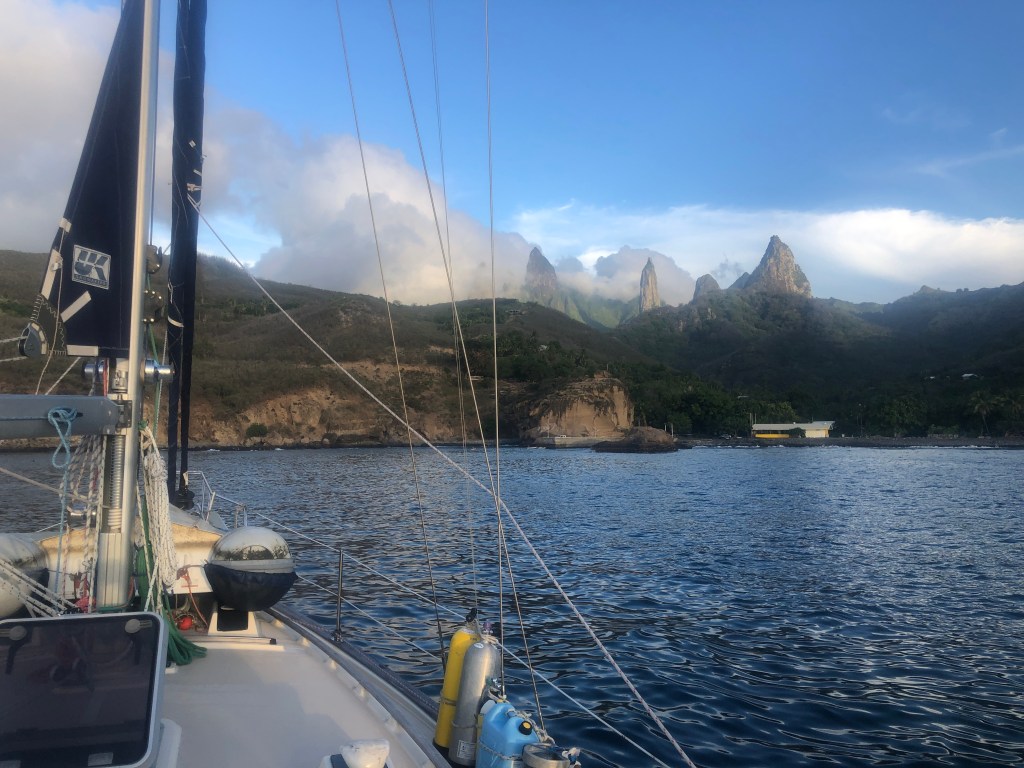
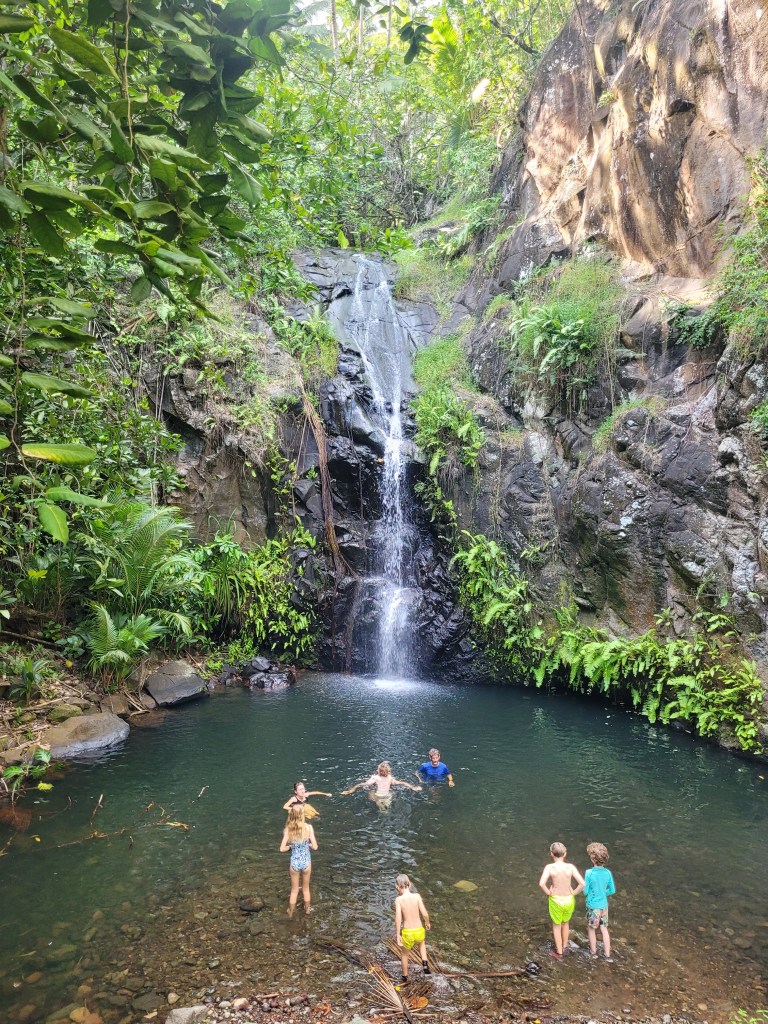
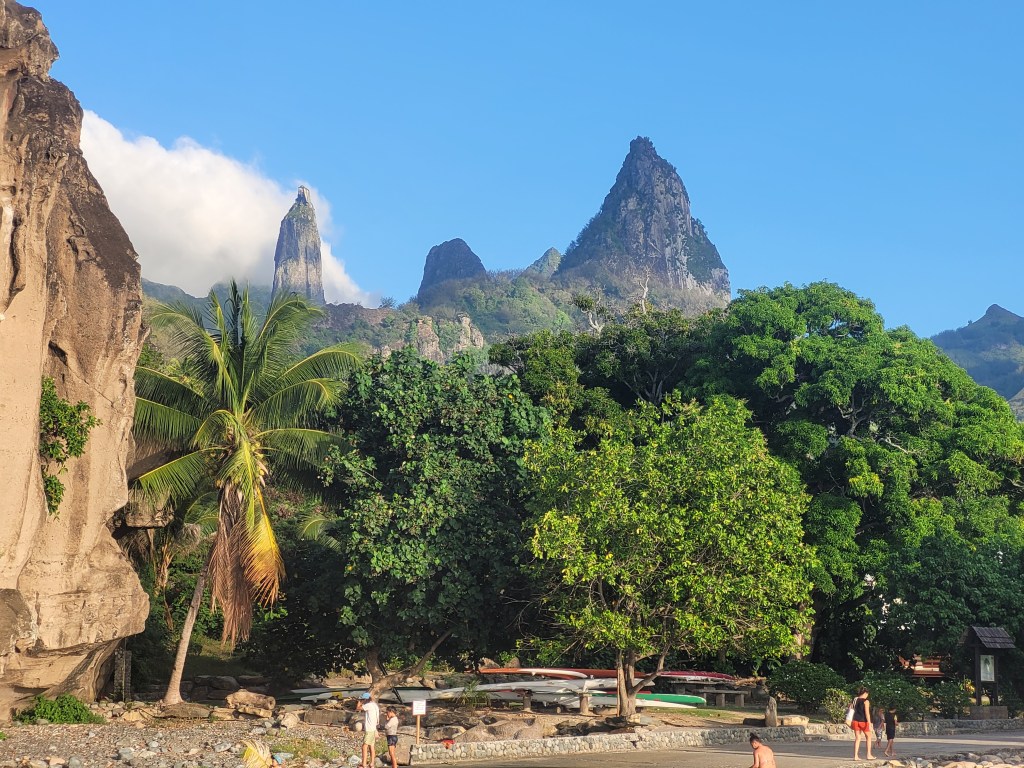
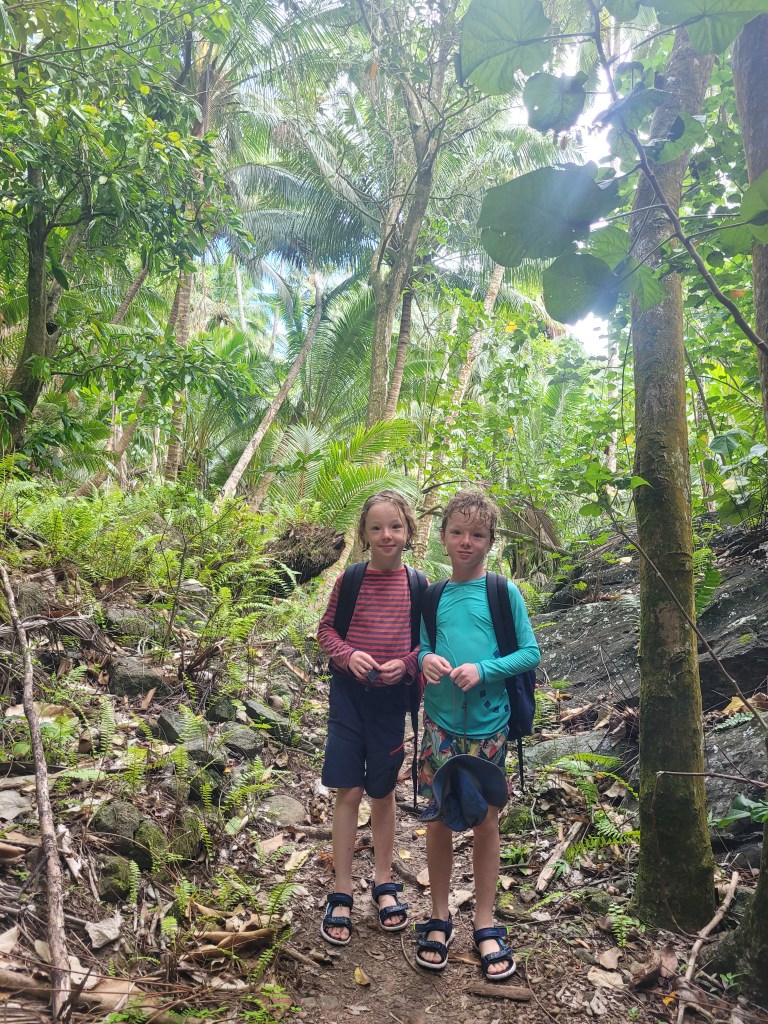
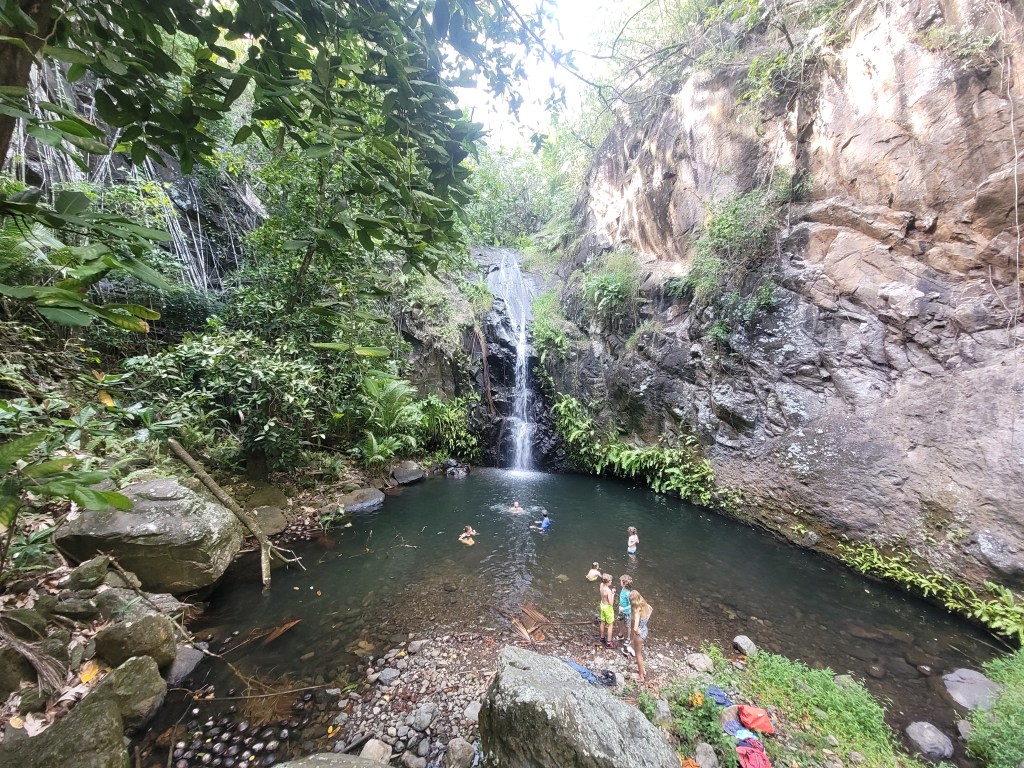
Our fifth and final destination among the Marquesan islands is Ua-Poa, a majestic island crowned by twelve dramatic basalt pinnacles and surrounded by lush rainforests. Our anchor found its place in the picturesque Hakahetau Bay. Accompanied by friends from SV Cinnamon, we embarked on a hike through tropical fruit orchards filled with star fruit, pamplemousses, and limes, ultimately leading us to a breathtaking waterfall. However, our idyllic swim was cut short by a swarm of particularly aggressive mosquitoes.
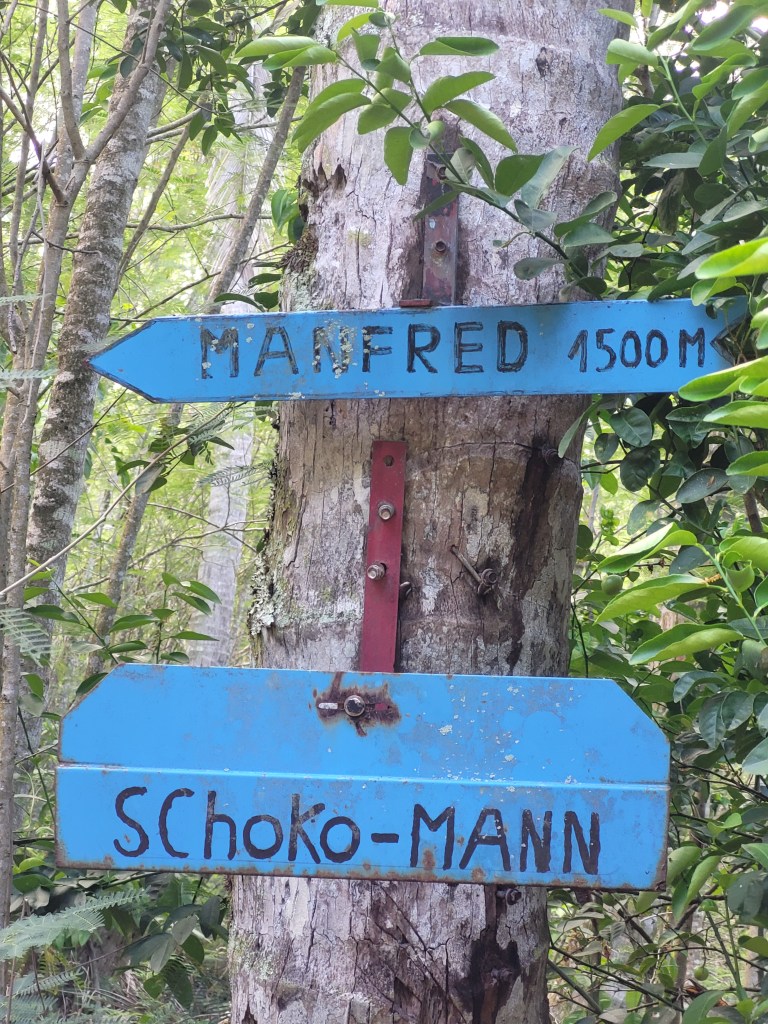
Our next visit brought us to Manfred Schoko-Mann, a German ex-helicopter pilot who has made French Polynesia his home for nearly three decades. Manfred has chosen Ua-Poa for his retirement and has ventured into the world of chocolate-making, offering his delicious creations to visiting sailors.
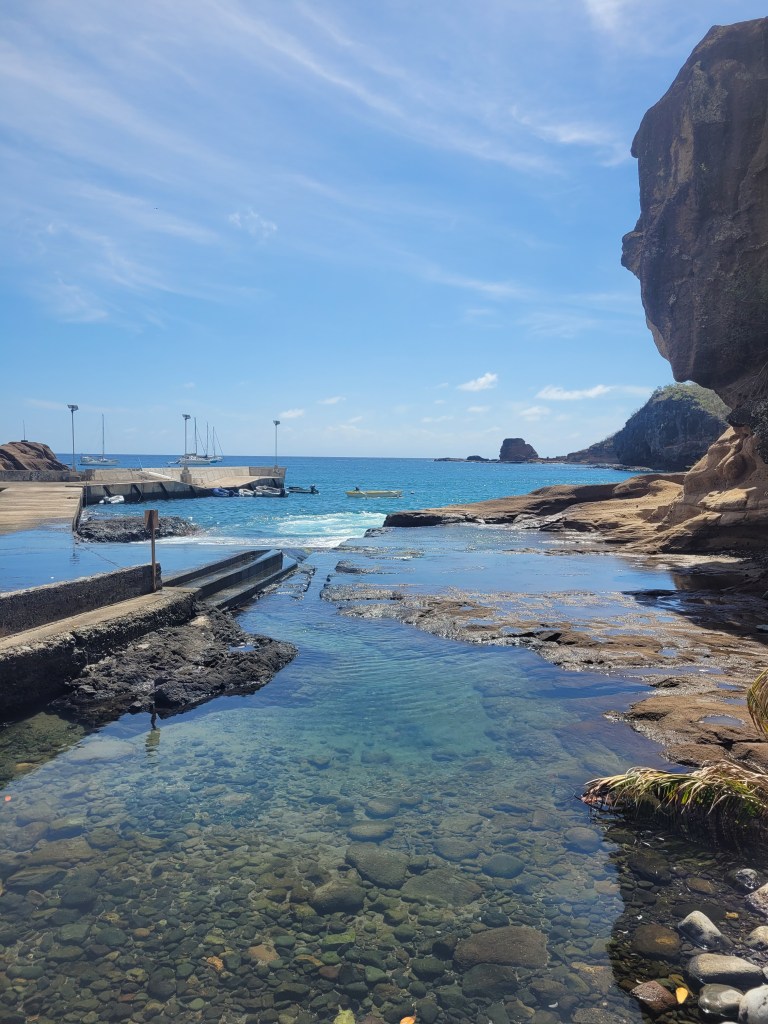
As a favorable weather window appeared for our 450-nautical-mile journey to the Tuamotus, we bid a reluctant farewell to the Marquesas after an unforgettable month exploring these islands. Our departure was accompanied by the sight of an impressive pod of acrobatic spinner dolphins, gracefully escorting us out of the bay.

Geology of Ua-Pau
Ua Pou, known as “the legendary pillars,” derives its name from the awe-inspiring peaks that dominate its interior, bestowing upon it a truly unique and distinctive topography. From its mythical origins to its remarkable geological heritage, Ua Pou’s landscape tells a captivating tale of millennia in the making.
Ua Pou is an imposing volcanic high island, covering an expanse of 105 square kilometers, a creation spanning approximately 2.5 million years. Its rugged terrain, largely unaltered by erosion, lacks the encircling presence of an emerged coral reef. Towering cliffs plunge into the ocean depths, relentlessly sculpted by the currents of the South Pacific. Deep valleys intersect the primary ridges, leading to picturesque bays where the island’s main settlements are nestled.
The island’s highest peaks stand as majestic sentinels: Oave (1,203m), Pouakei (1,034m), Matahuena (1,028m), Poumaka (979m), Poutetainui (970m), and Poutemoka (683m), among others. However, unlike its Marquesan counterparts, Ua Pou lacks a distinct “caldera,” a circular volcanic depression. Instead, it boasts a central mountain range from which these unique phonolitic peaks have emerged.
Like all Polynesian islands, Ua Pou will undergo gradual transformation due to erosion and subsidence, eventually becoming a lower island and later a seamount. However, it will never evolve into an atoll due to the absence of aerial coral reefs in this region.
 Sailing Mowzer
Loved your three posts , it’s all looks so amazing on your wonderful adventure . Would love to see the Pacific Islands , but would never get to see them as you are doing .
LikeLiked by 1 person
Thank you, we are incredibly lucky to visit some of the places we have. A lot of the Pacific islands have no tourism at all as they are so remote and there isn’t the infrastructure, the only way to get in and out is on a boat. It’s rare to find places like this.
LikeLike