September 2024, Back to Darwin, and back to the drawing board.
With a poorly relative in Europe, we decided it was not the time to disappear into the depths of Asia, with long passages of isolation away from international airports. And as much as we enjoyed Darwin, staying was not an option as cyclone season was nearly upon us. With so many friends in Sydney, we decided to retreat there whilst we worked on our Plan B.
Much angst and research ensued as we planned our return journey. We contemplated sailing the 4000+ nautical miles anticlockwise around Australia – sailing first to the Kimberly region, then South to Perth, and onwards across the Great Australian Bight – a super tricky passage that invariably requires taking a beating in the Southern Ocean where ports of safety are few.
The alternative, to retrace our steps 2400 nautical miles and sail back through the Torres Strait and down the East coast, was equally unappealing. Beating into powerful trade winds consistently pumping at 25+ knots and strong counter-currents would make for slow, uncomfortable passages. Mowzer is great at sailing downwind, but because of her wide beam (fat middle) and ancient saggy sails, does not sail well into the wind.
Local advice, to wait until the trade winds eased off in November, required that we hang around well into the cyclone season, invalidating our insurance which required that we were south of Bundaberg by 1st November.
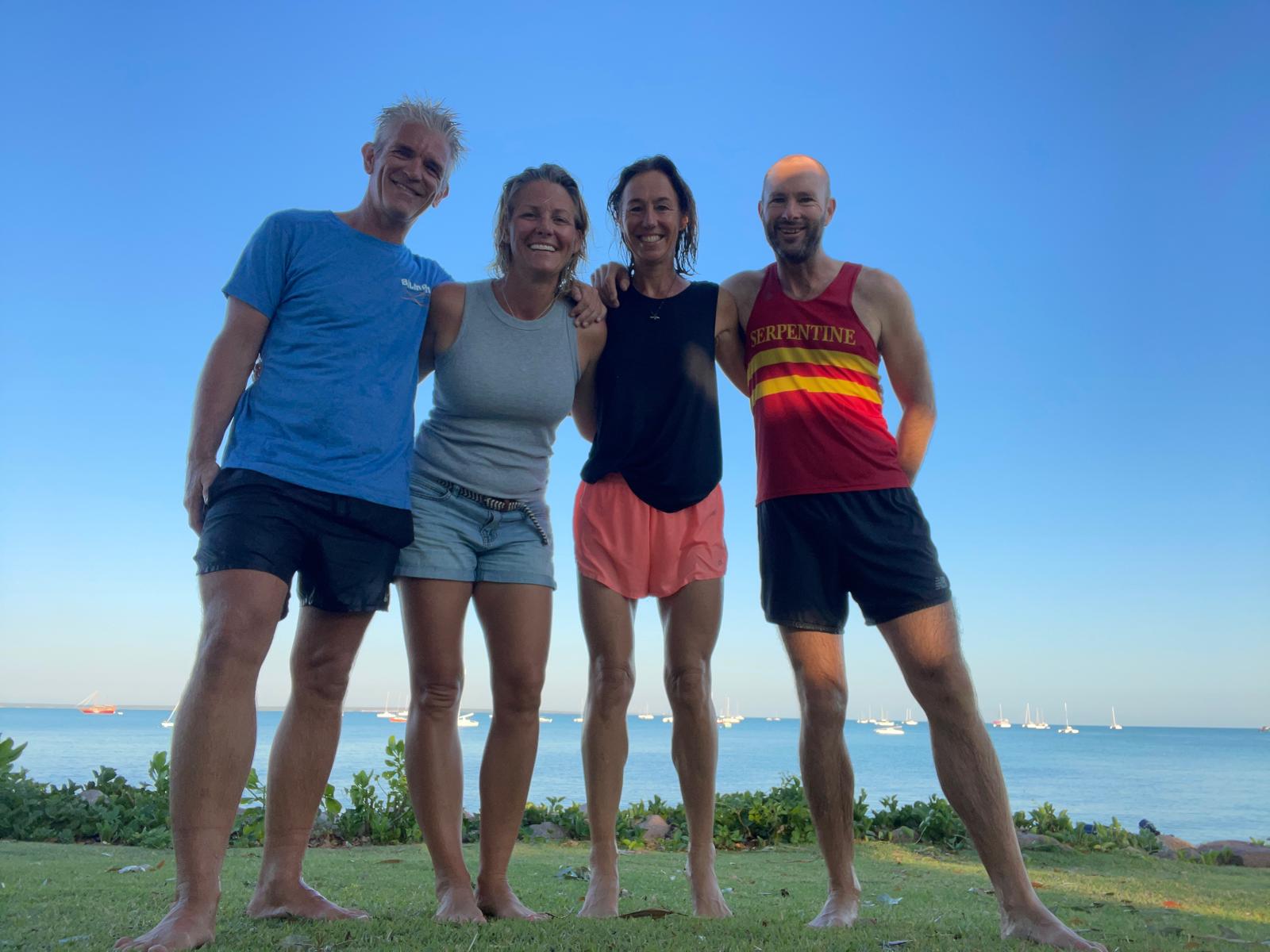
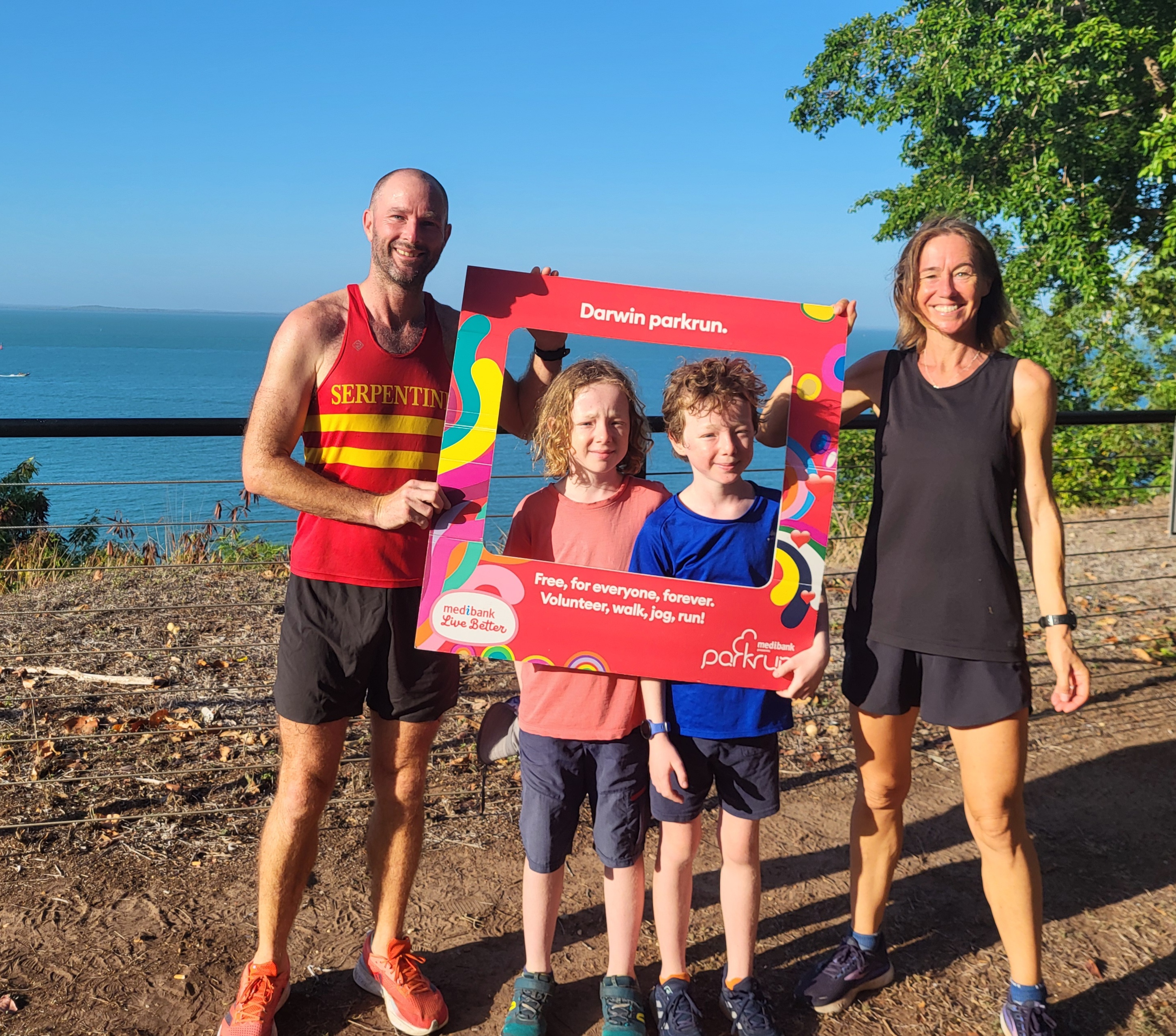

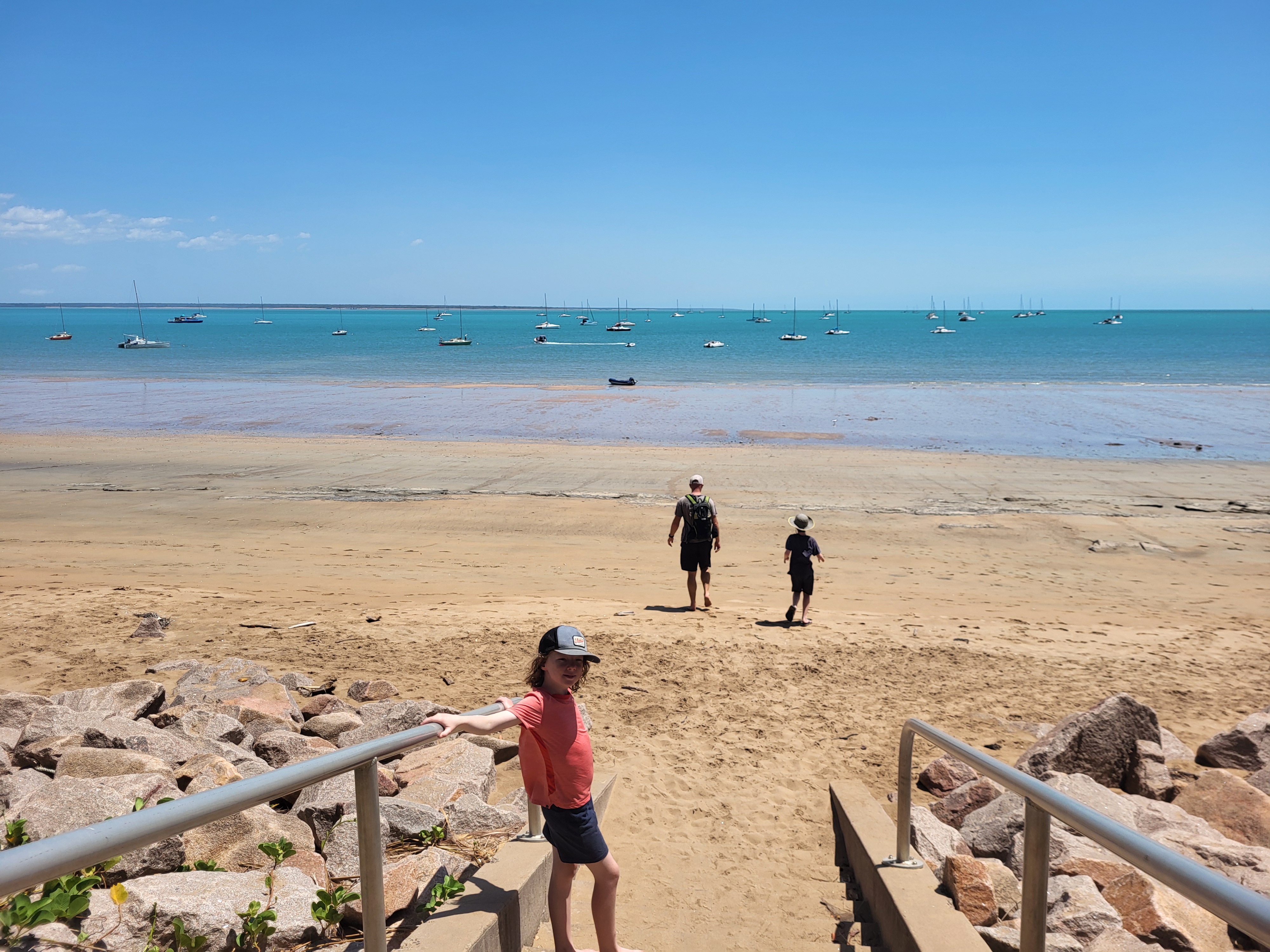
We had a couple of weeks in Darwin, catching up with friends, running and exploring whilst we weighed up our options and waited for a viable weather window to leave. We eventually left Darwin on 20th September, opting for the clockwise option, retracing our route through the Torres Strait.
Just reaching Cape Don, 100 nautical miles away required a couple of stops as counter currents running at 6 knots halted progress.
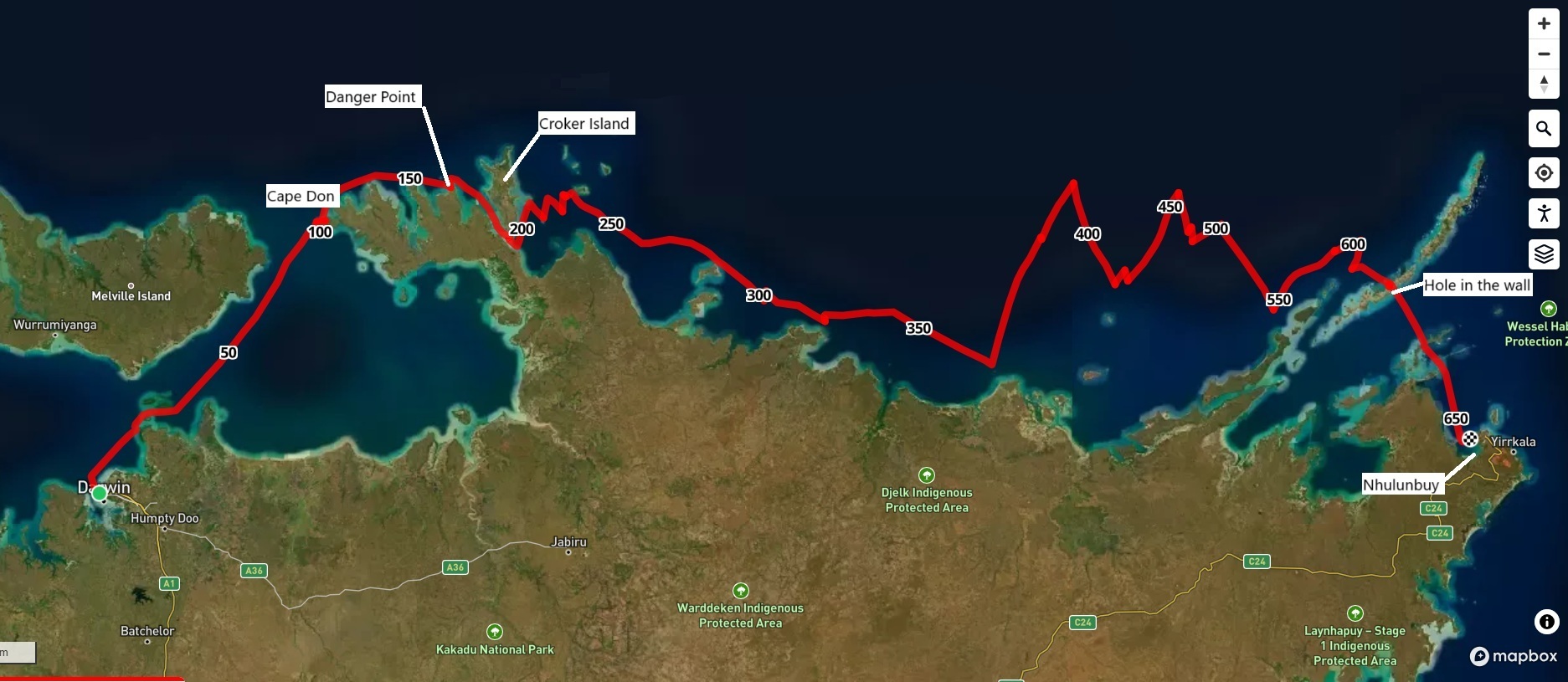
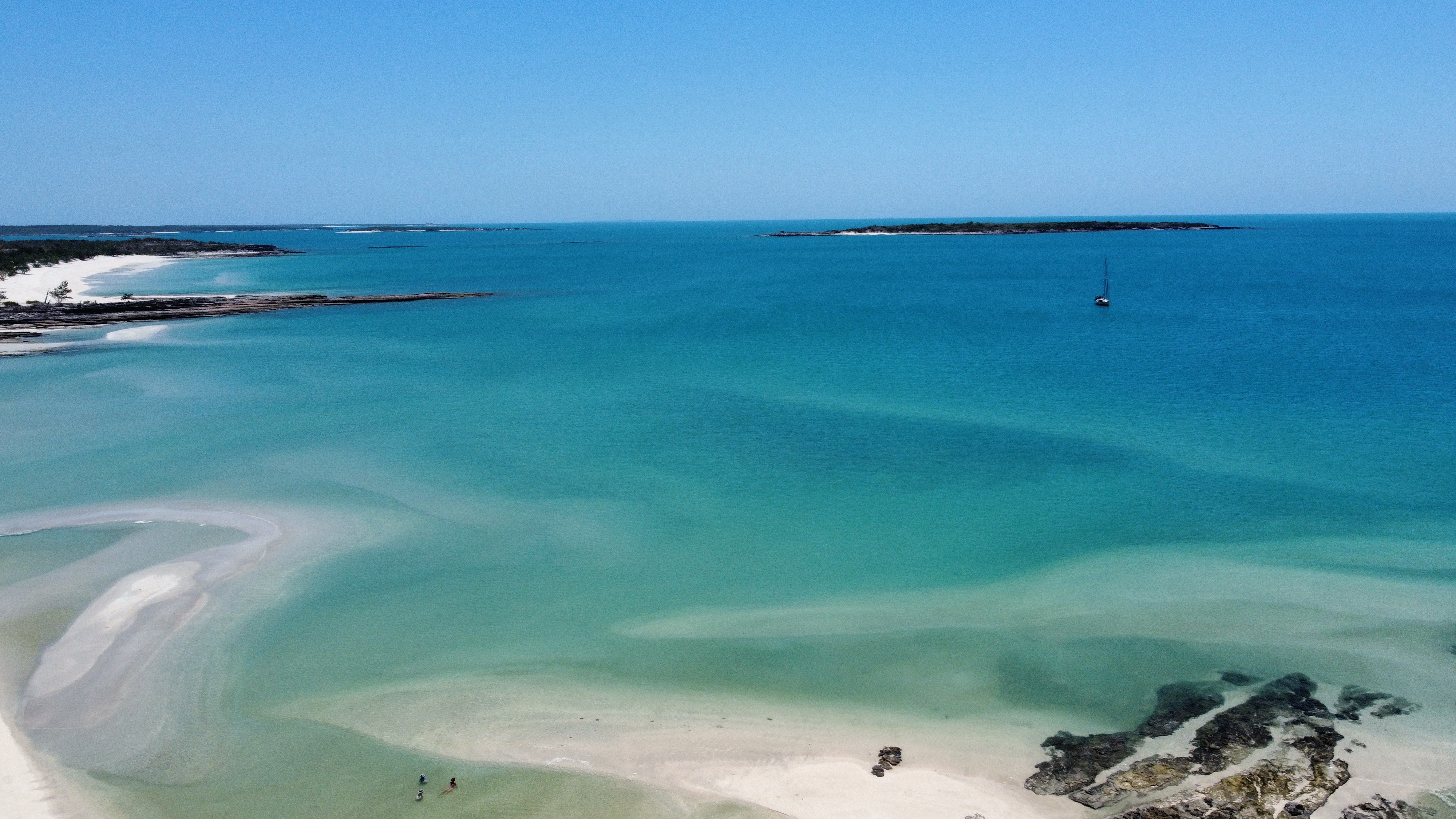
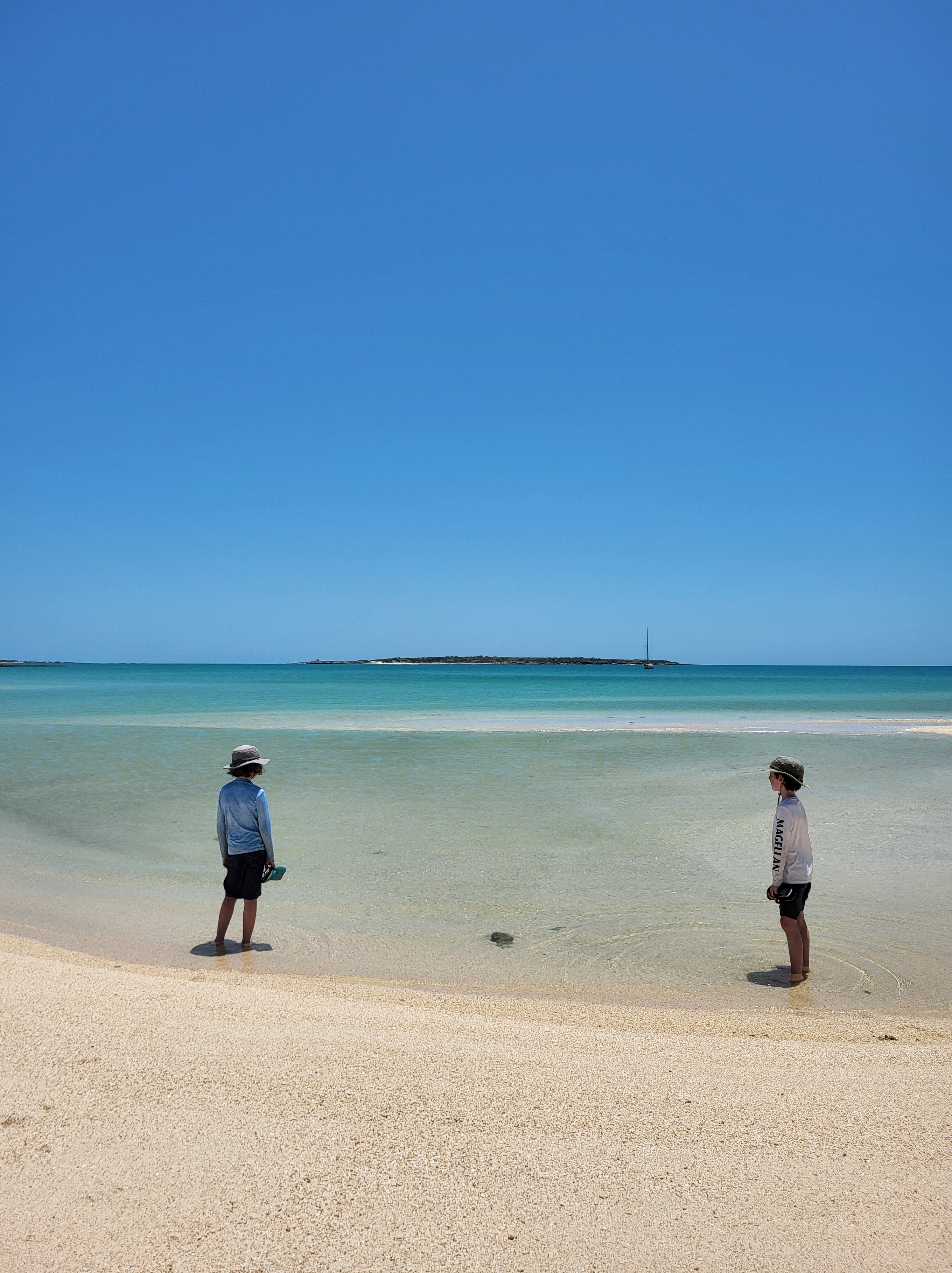
From Cape Don, we made slow progress, tacking our way to Danger Point and then to David Point on Crocker Island. Progress made good over 24hrs was sometimes as little as 40 nautical miles (75km).
Hugging the coast where the wind was less fierce, took us along Arnhem Land, a vast wilderness area in the Northern Territory. It’s difficult for Europeans to comprehend just how isolated and remote this region is. Arnham Land is very approximately half the size of the UK but has a population of only 16000 mostly Aboriginal Yolngu people. With no cities and minimal infrastructure, this region inspired both awe and fear – fear that if something broke, or if we needed any assistance we were very alone. During this period we saw just one cargo vessel, no settlements, no VHF chatter, just vast expanses of silent, parched land and sandy beaches.
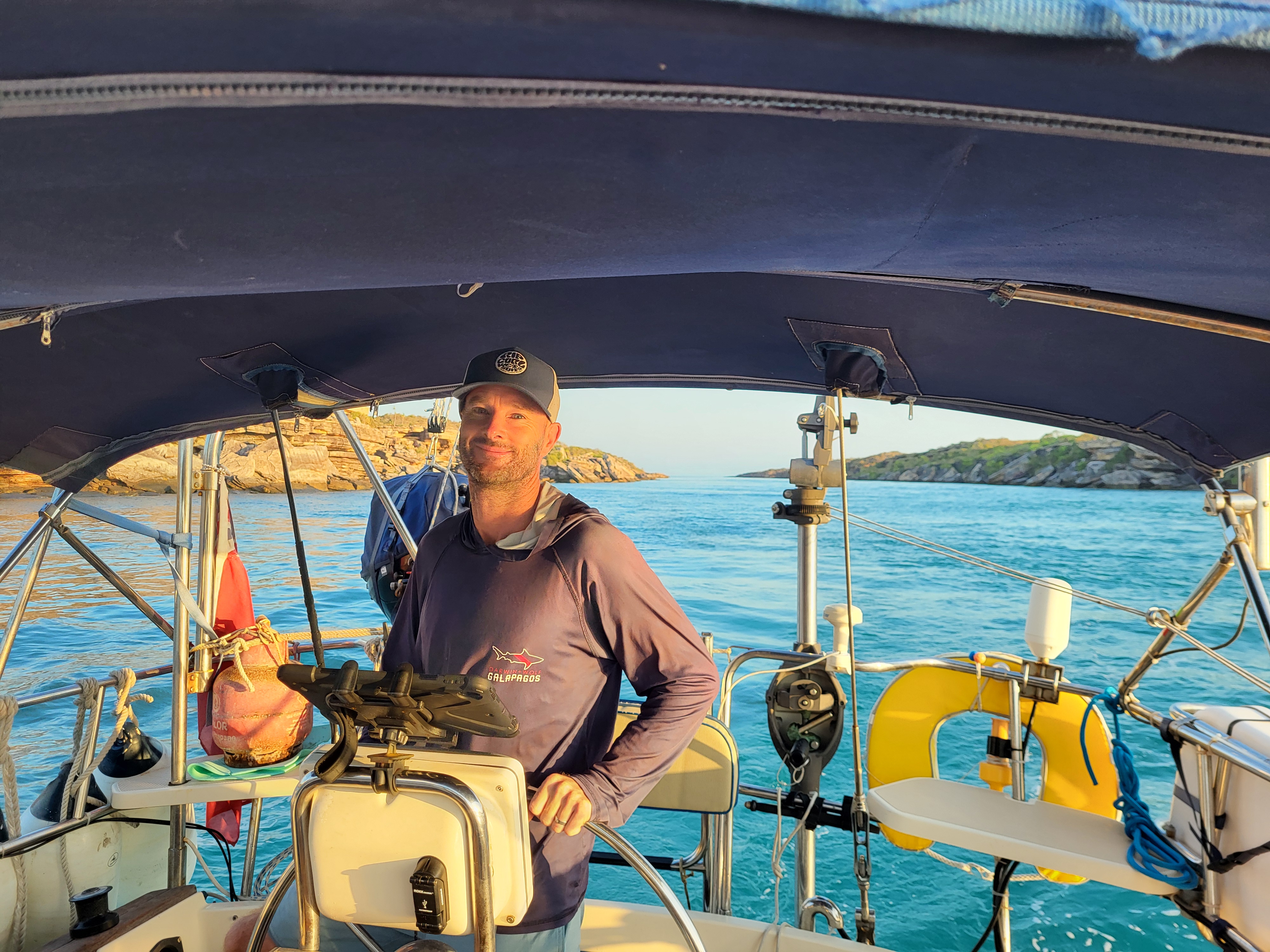
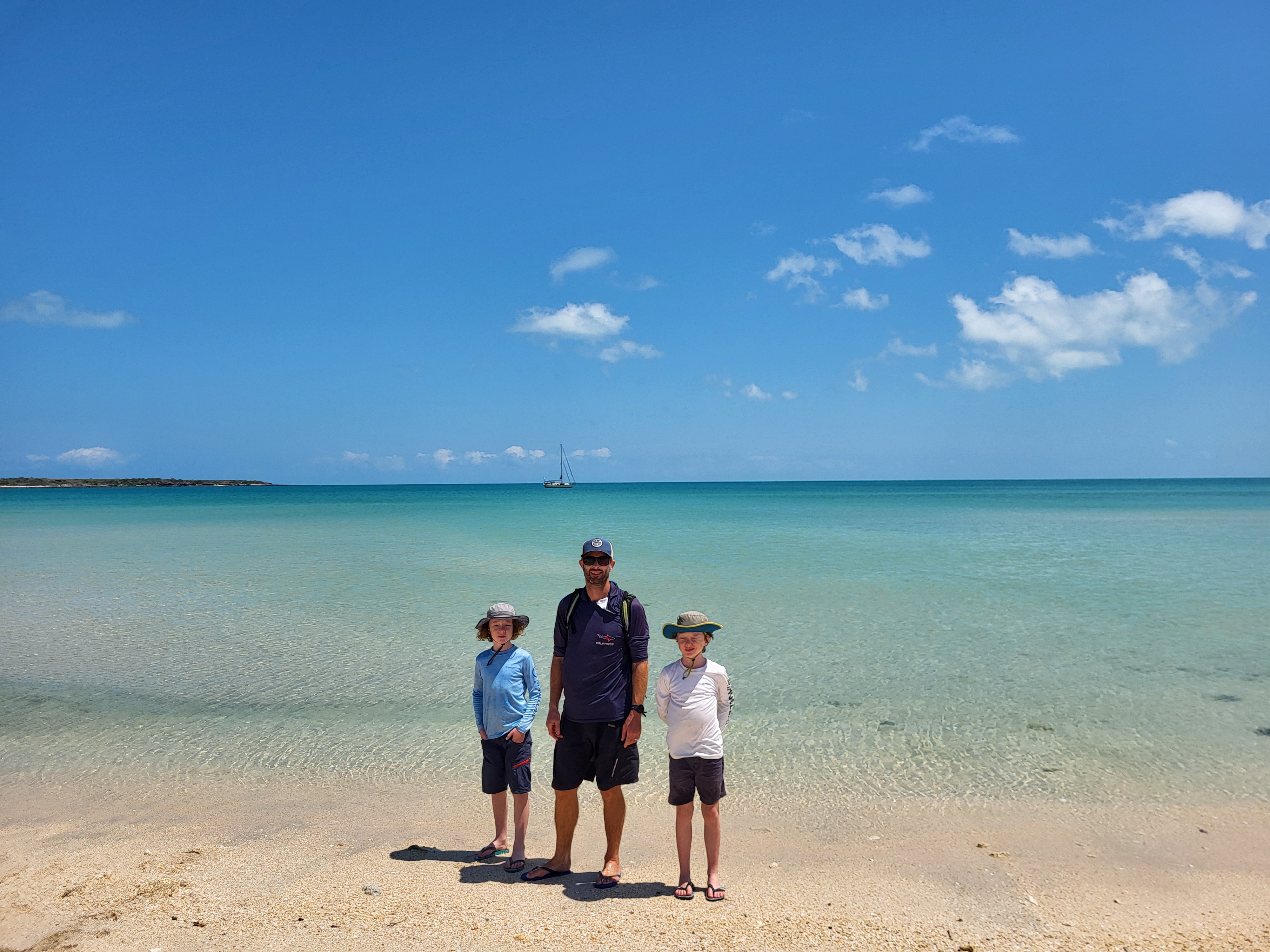
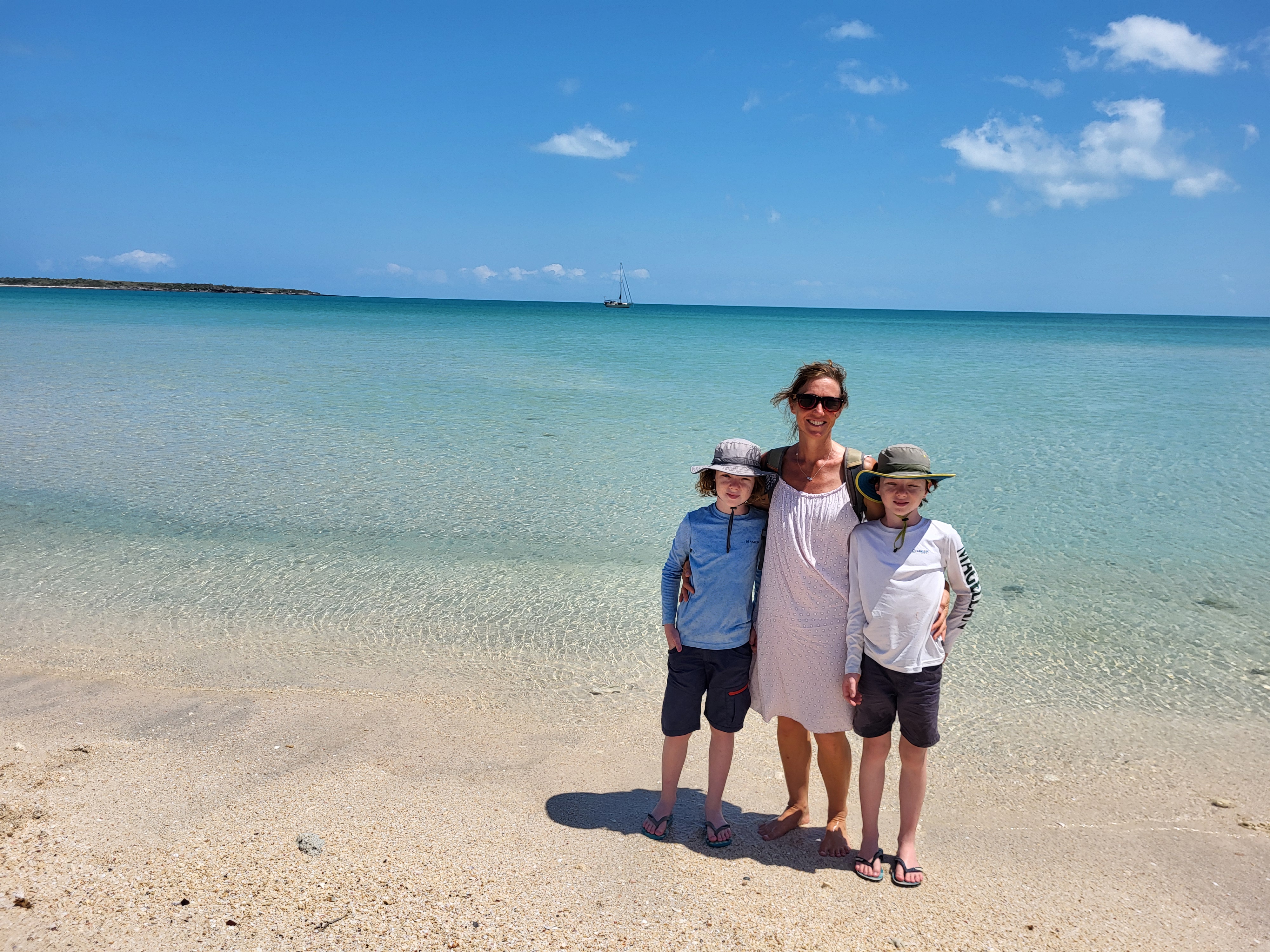
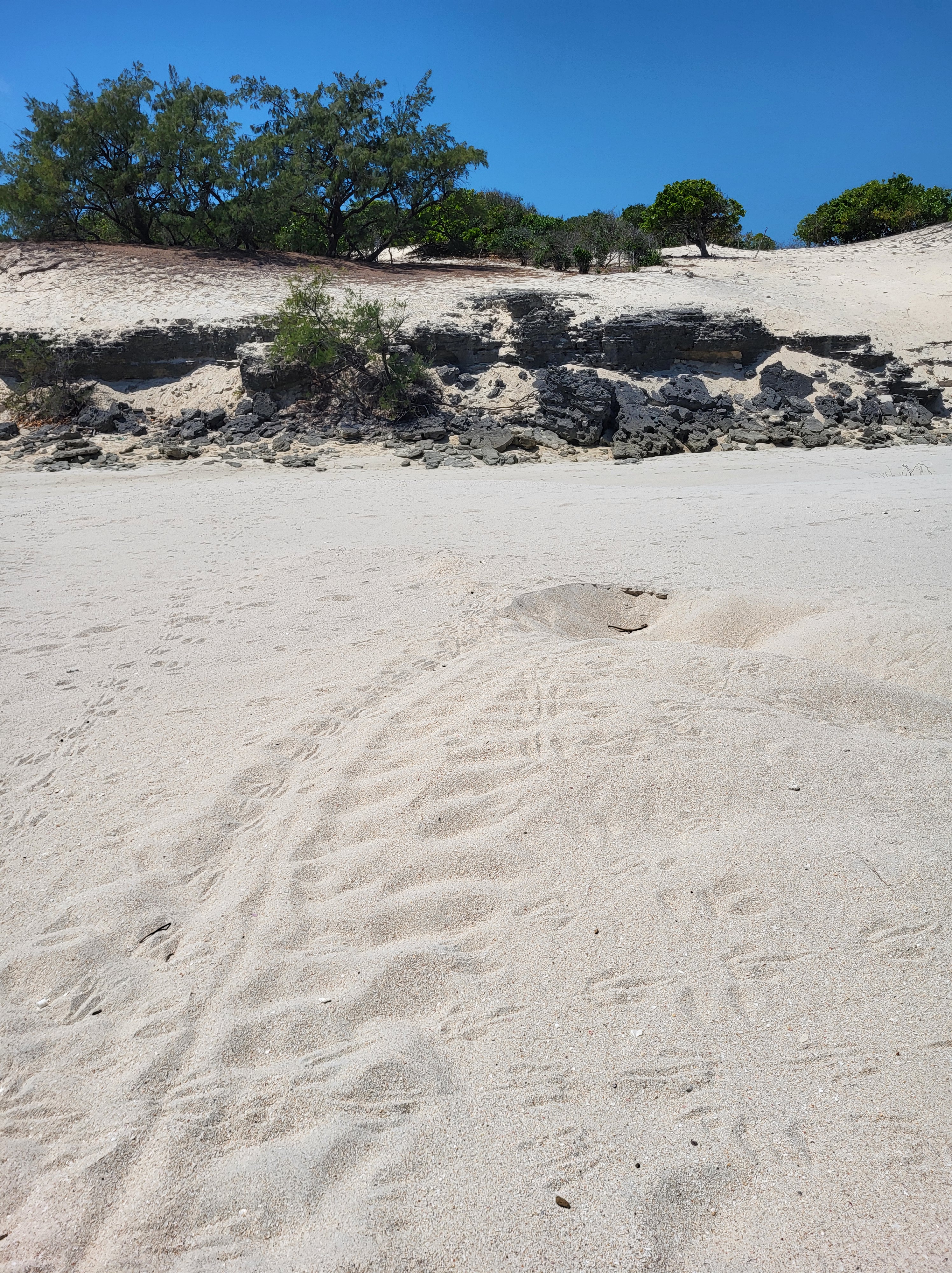
Our next milestone was the Gulgari Rip, also known as the Hole in the Wall, a narrow waterway between Guluwuru Island and Raragala Island where the tidal flow can reach over 10 knots. We anchored on the western approach overnight to wait for slack water, and explored ashore, a vast expanse of scorched rocky land with an idyllic beach covered in turtle tracks.

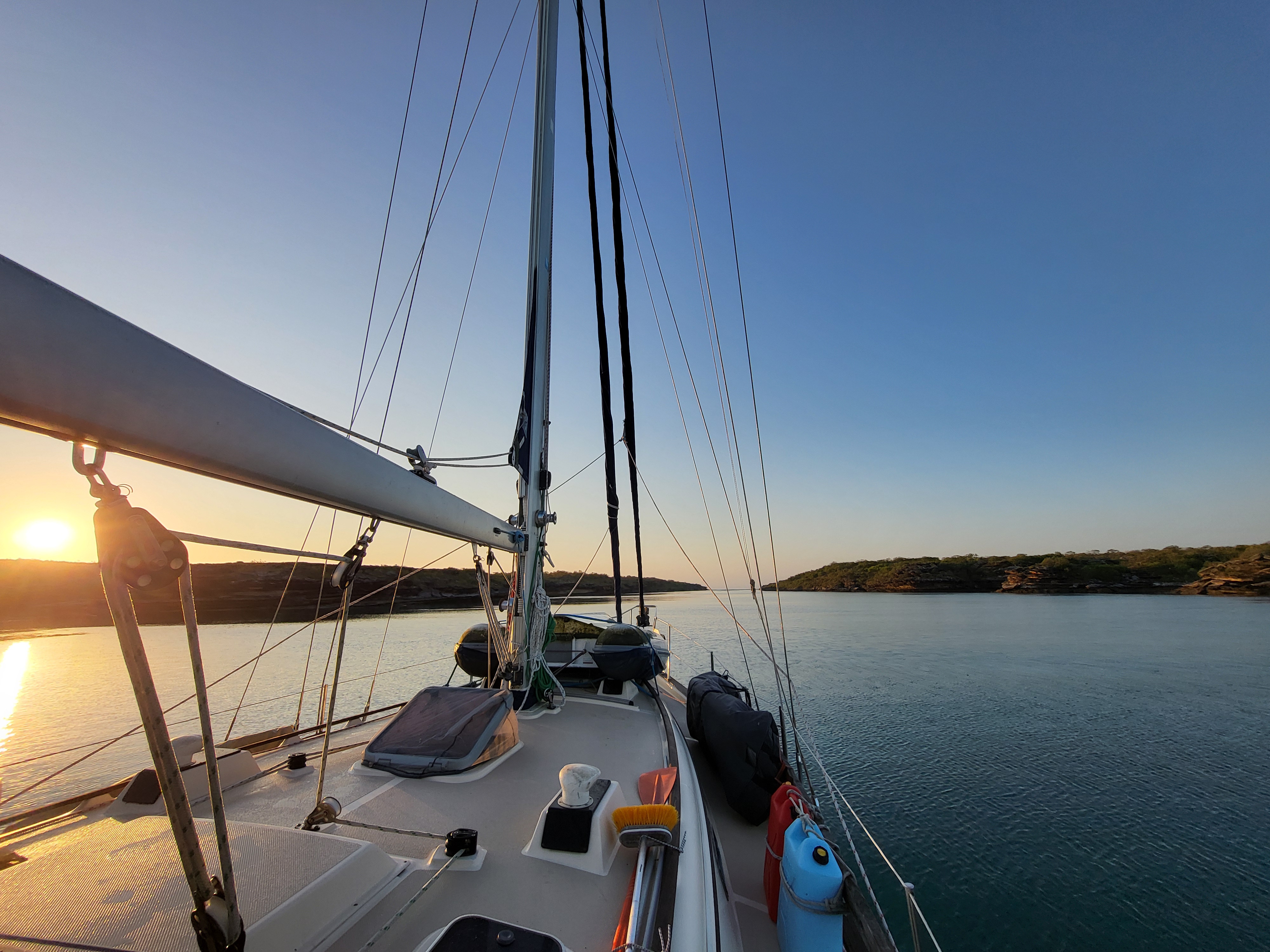
The following morning we entered the Gulgari Rip, and were rapidly spat out the other side. Later that day, we arrived in Nhulunbuy, 10 days after leaving Darwin.
October 2024, Nhulunbuy, Gove Peninsula
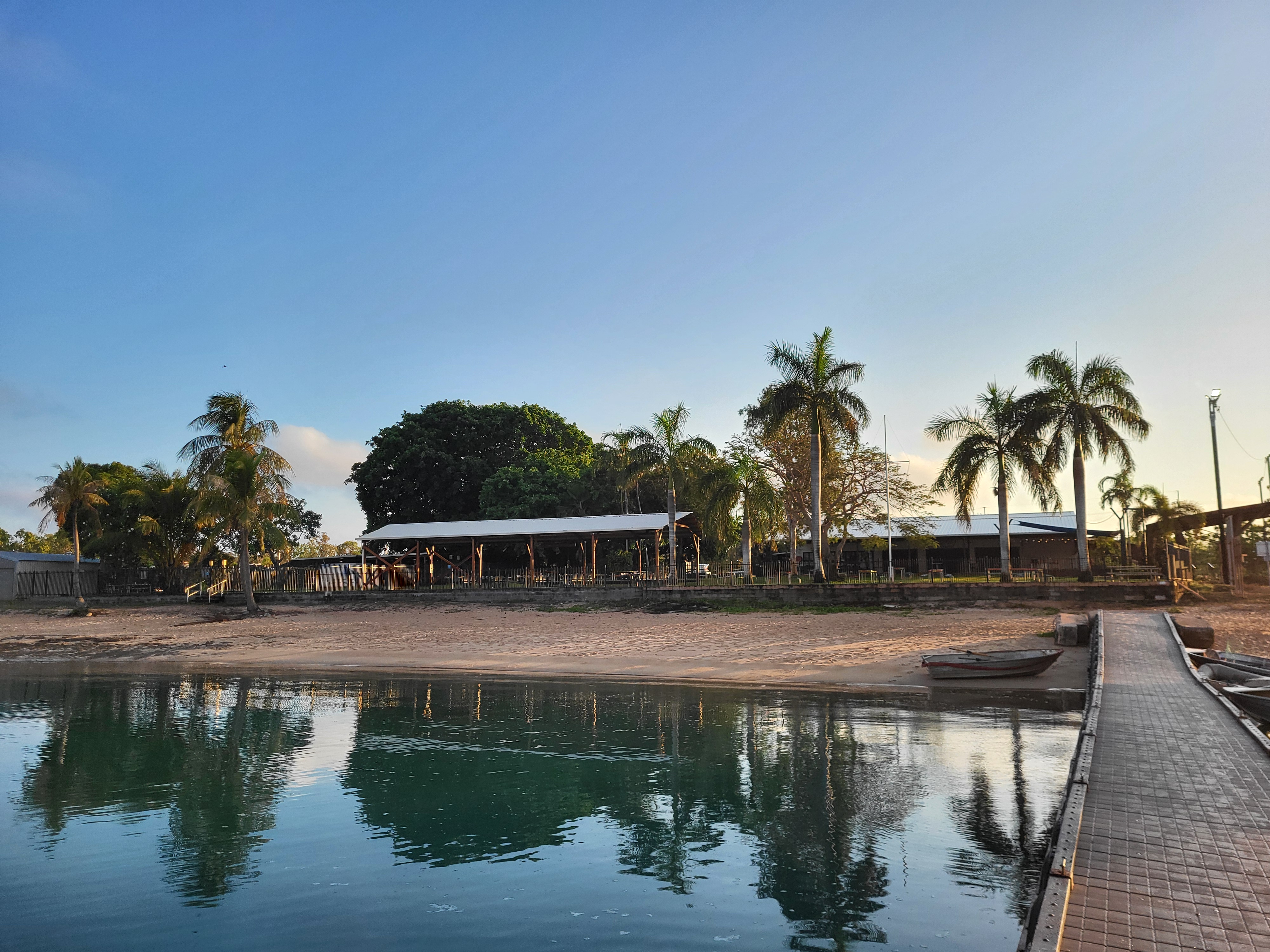
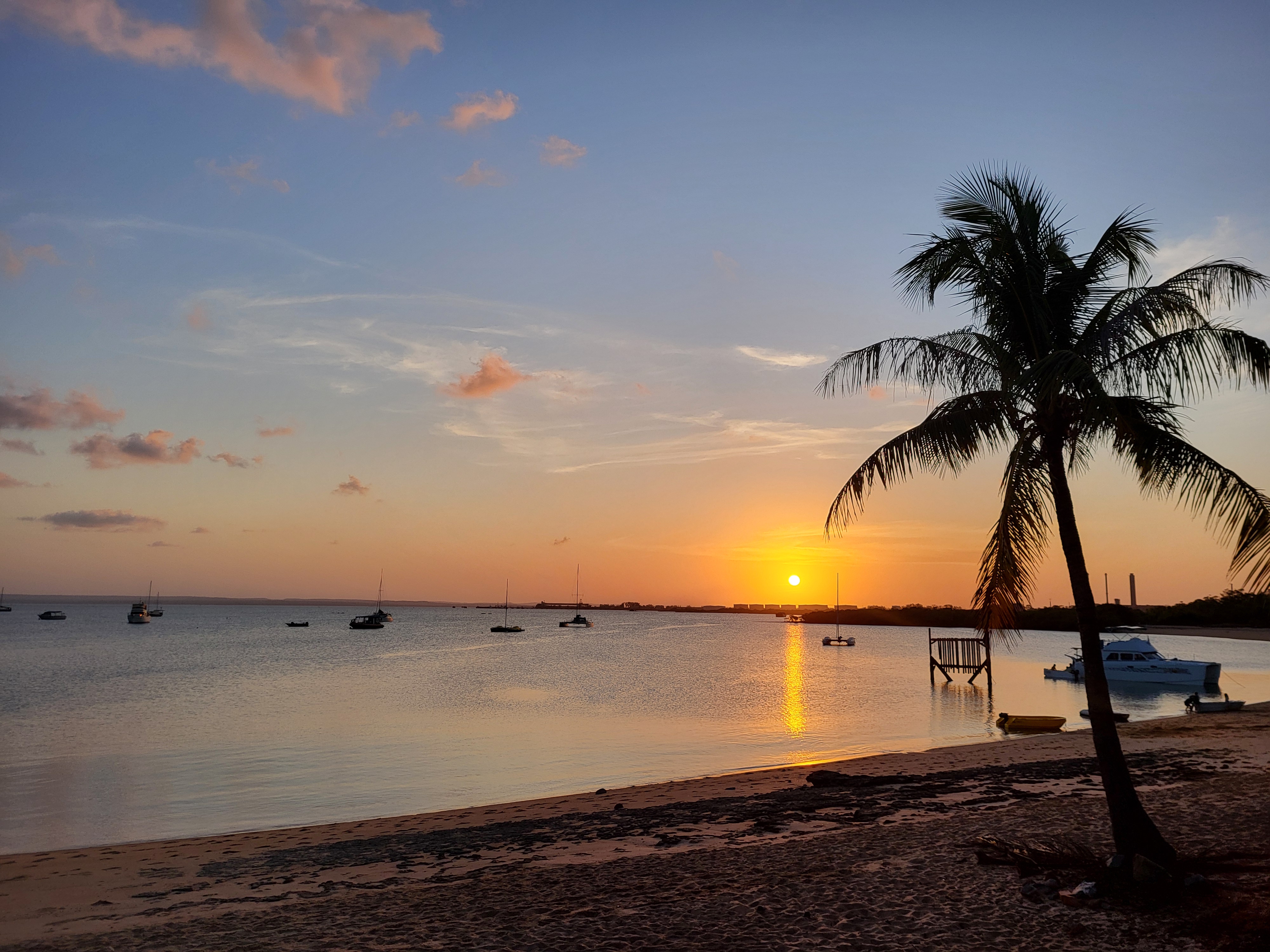
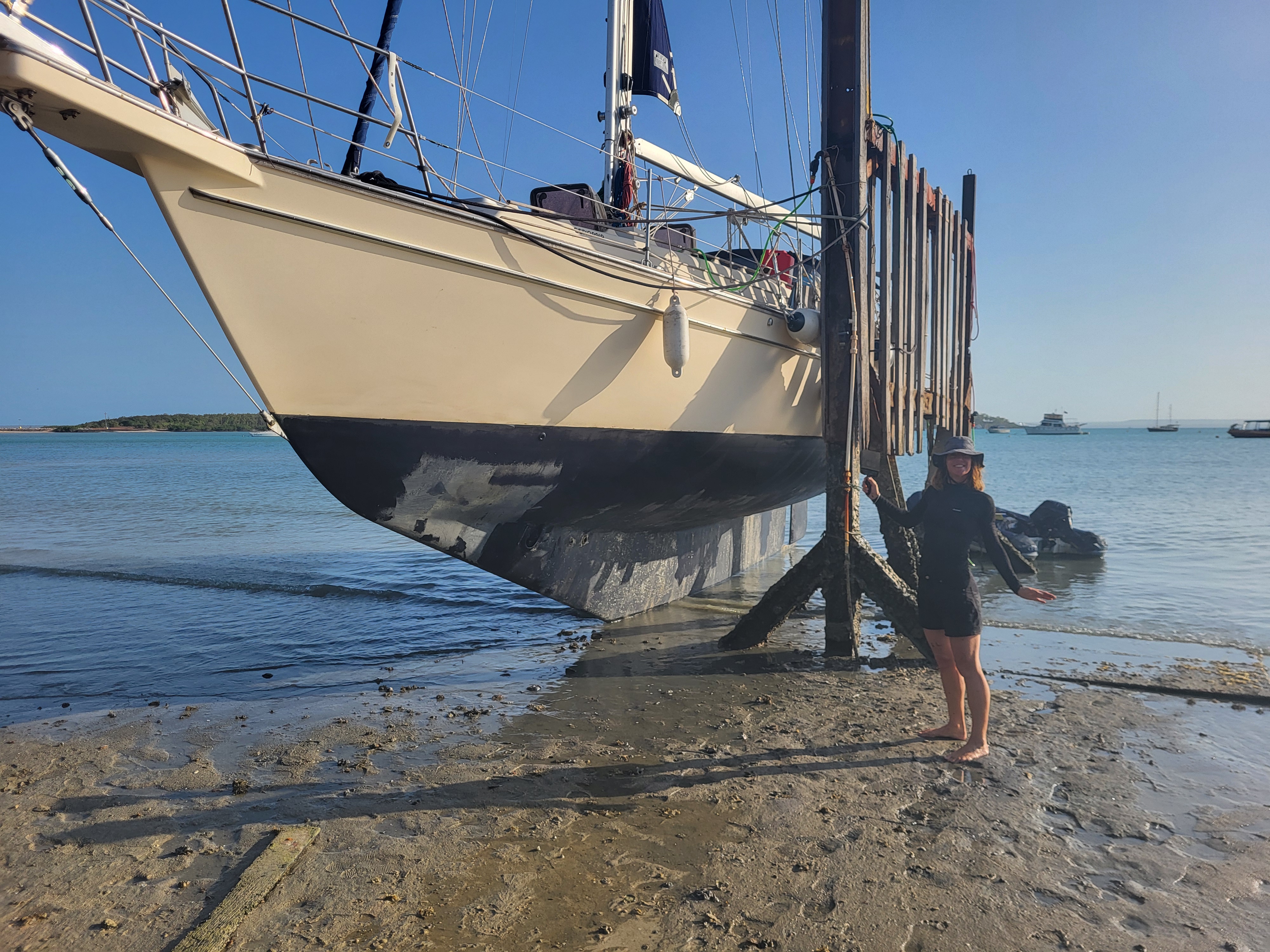
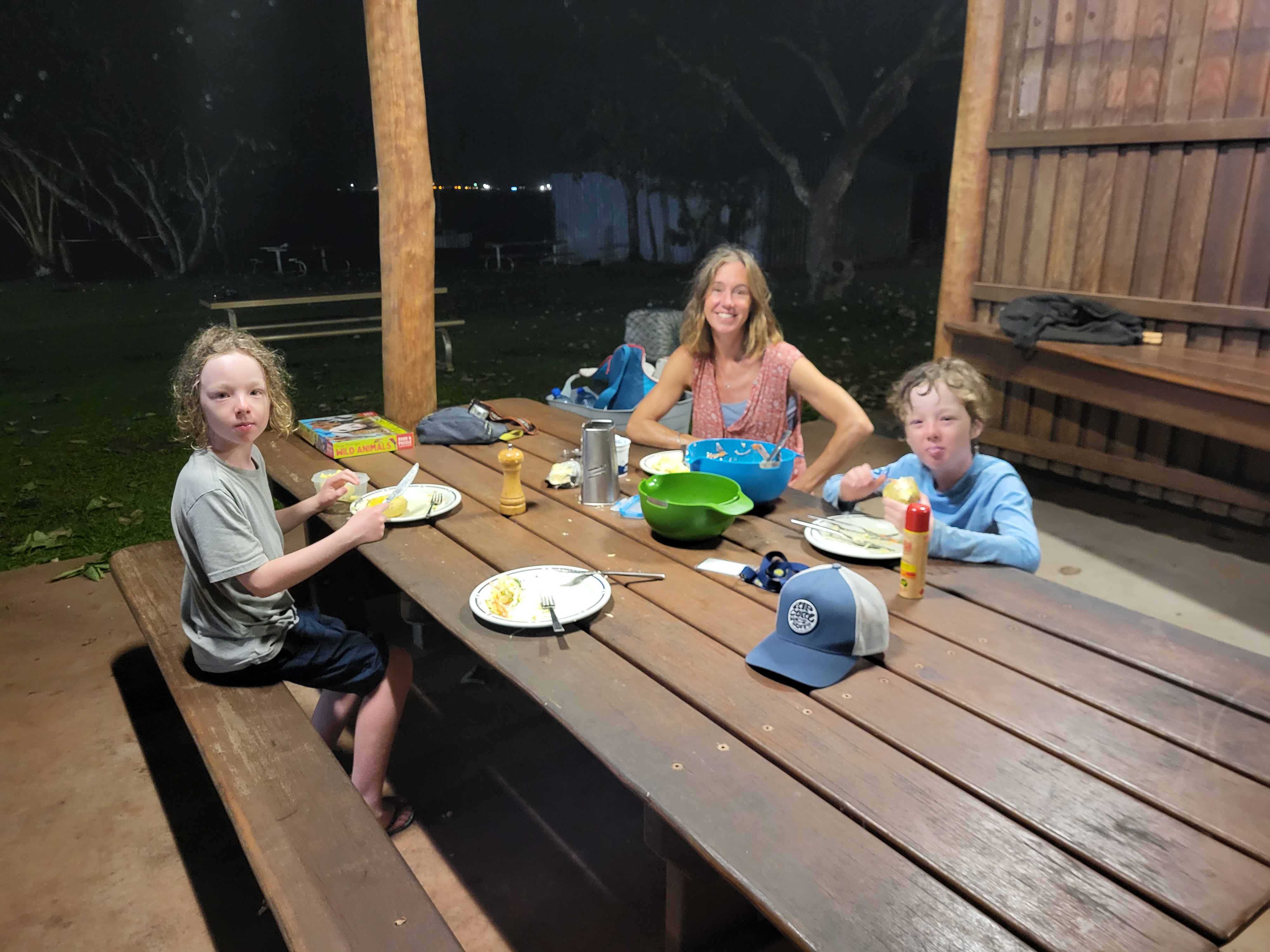
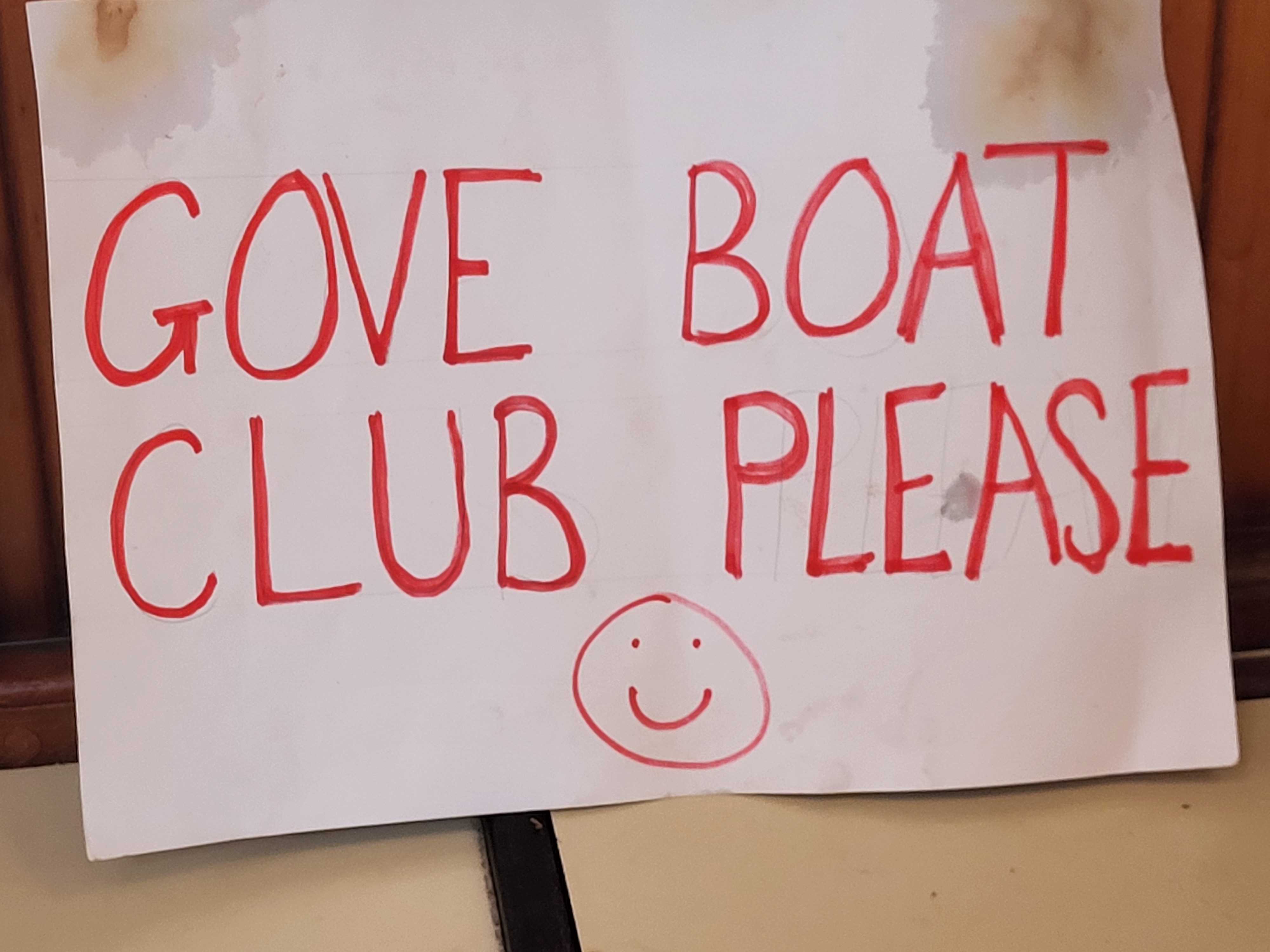
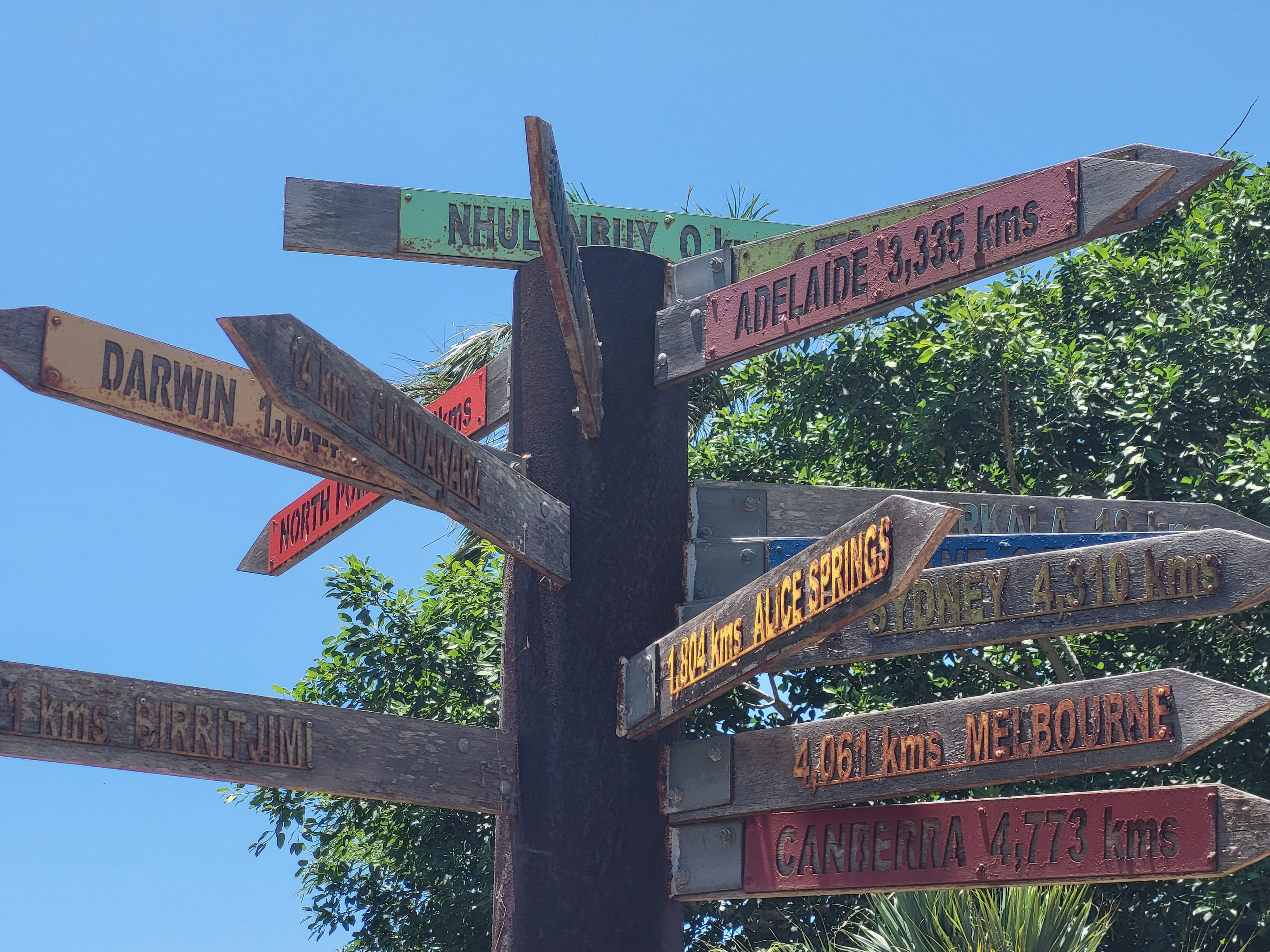
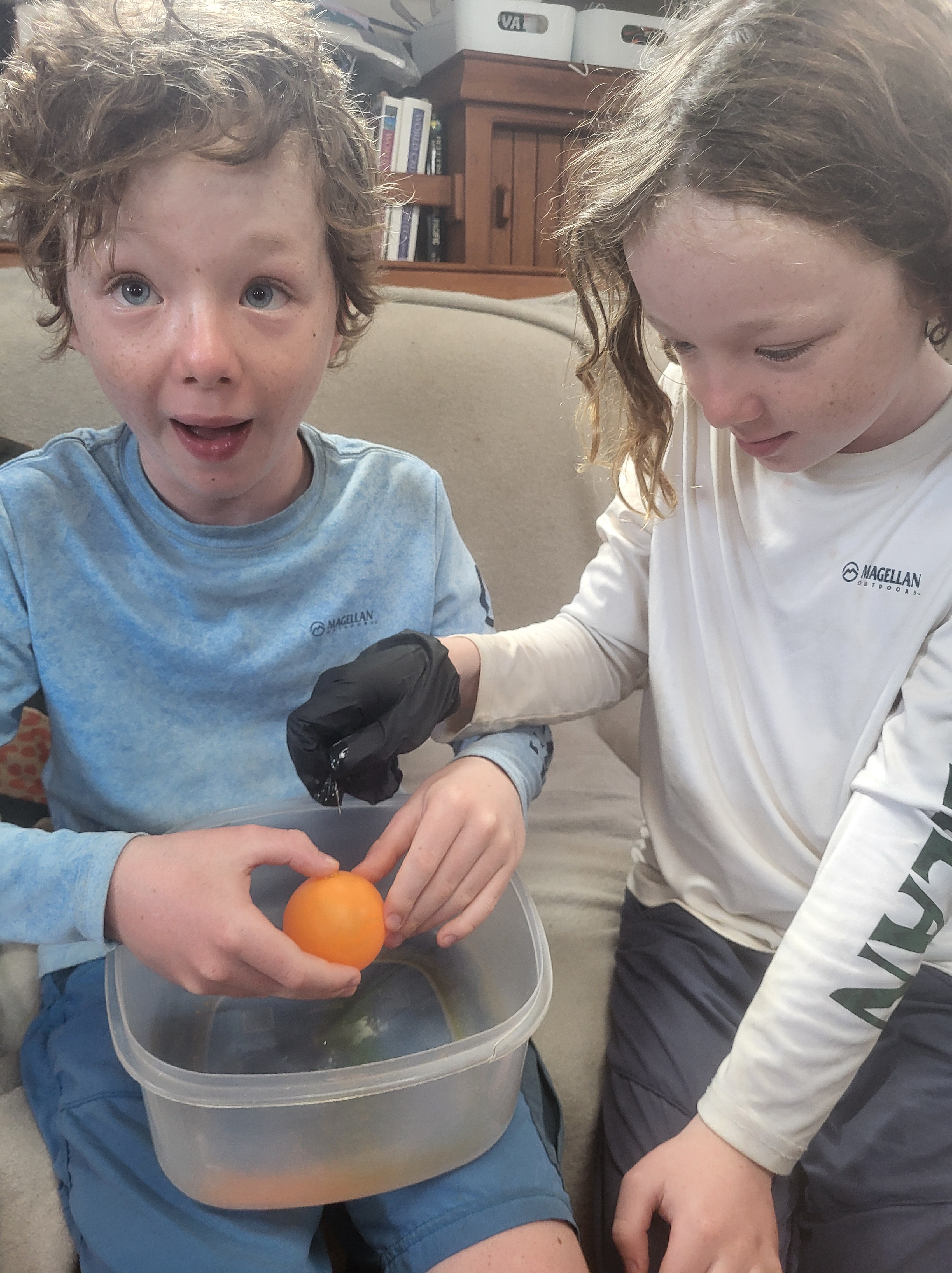
Nhulunbuy, in Arnham Land, has been home to the Yolngu people for at least 40,000 years. In the 1960s it was developed as a bauxite mine and refinery and now has a population of approximately 3000. Here we reprovisioned, scrubbed Mowzer’s bum, swam, hitch-hiked, did some Science projects for ‘school’. Mostly though, we obsessively watched the weather forecasts as we planned our next passage back across the Gulf of Carpentaria, our most challenging passage of the past 3 years.
 Sailing Mowzer
Hi you lot I have just read this most informative piece
LikeLike